
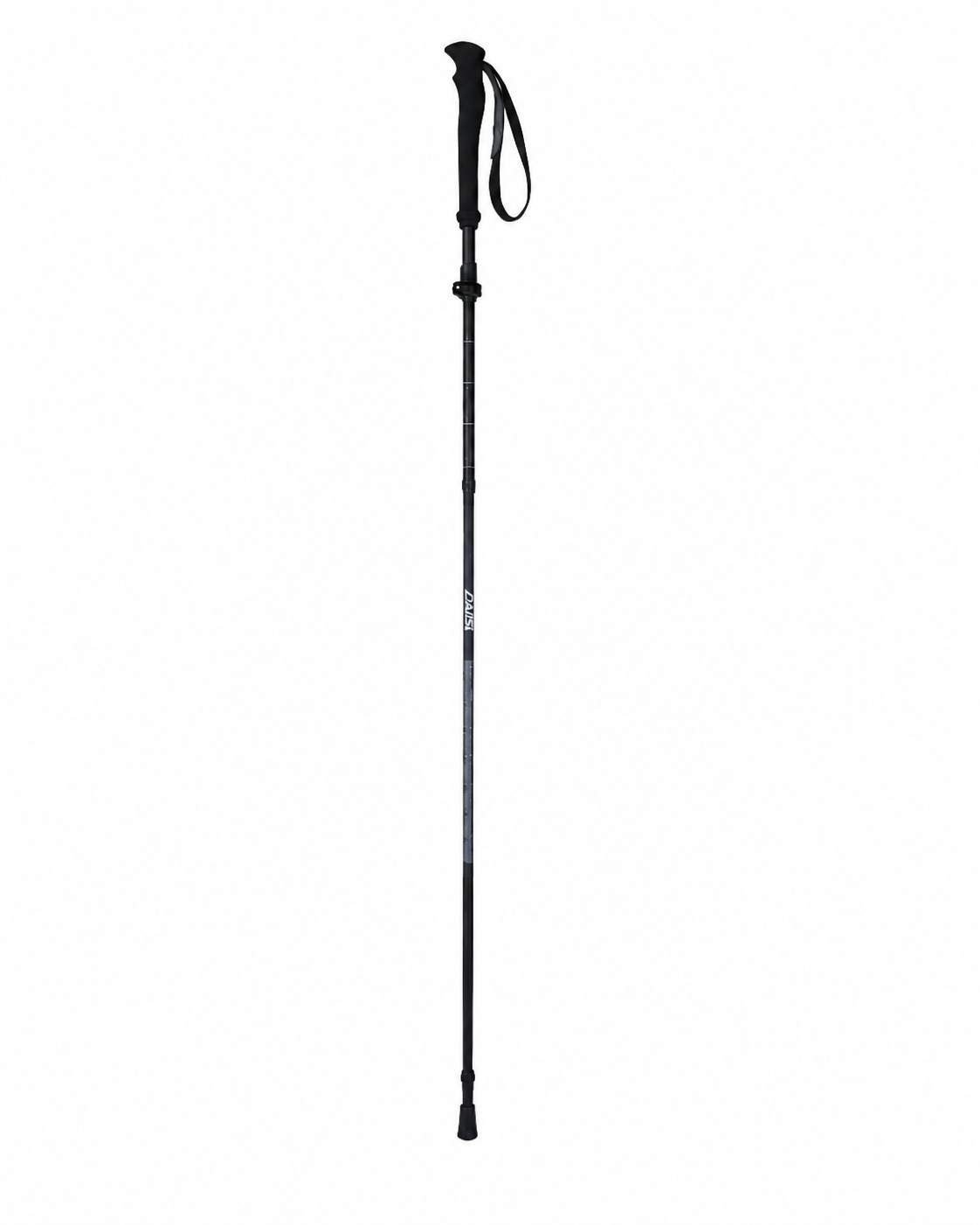
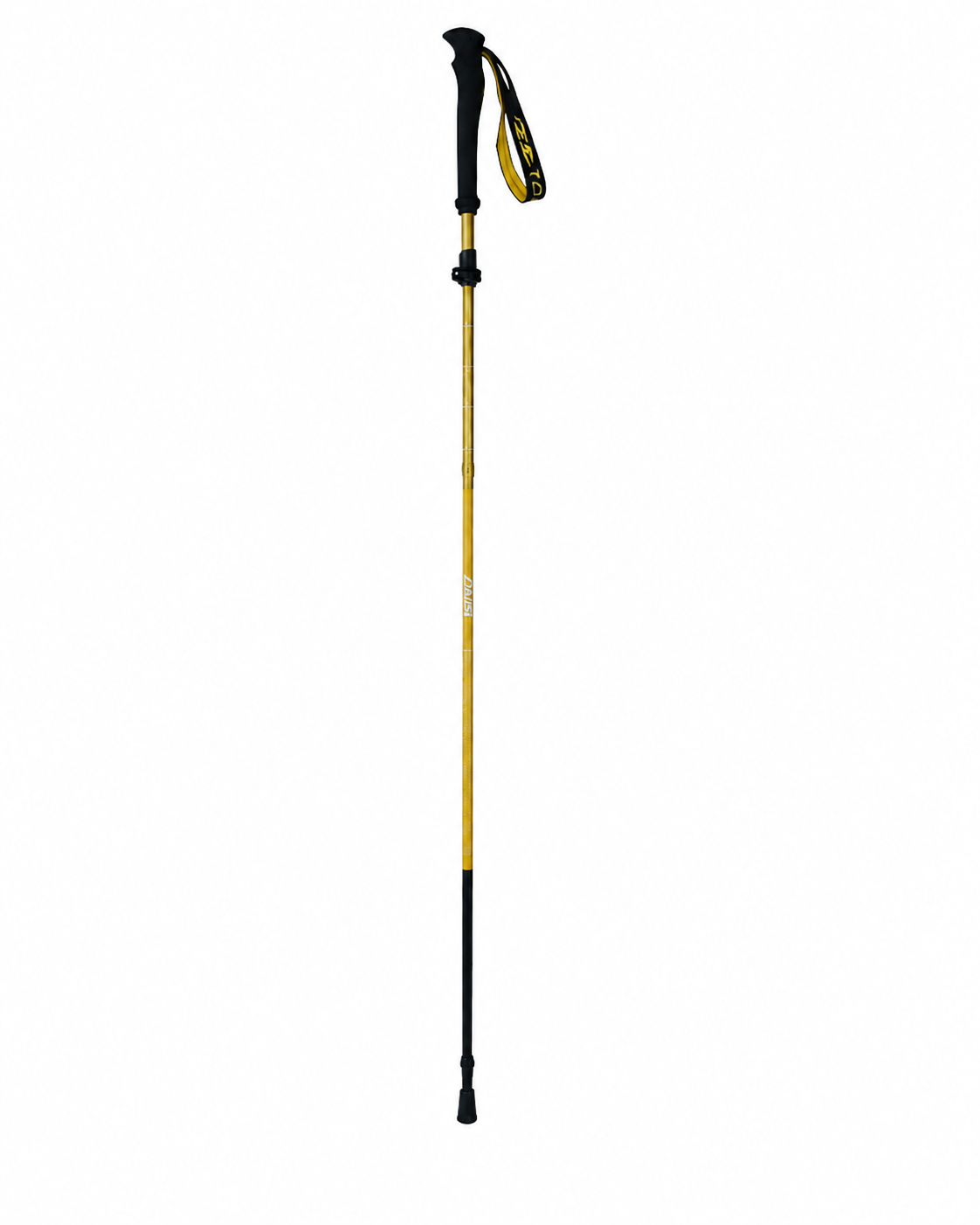
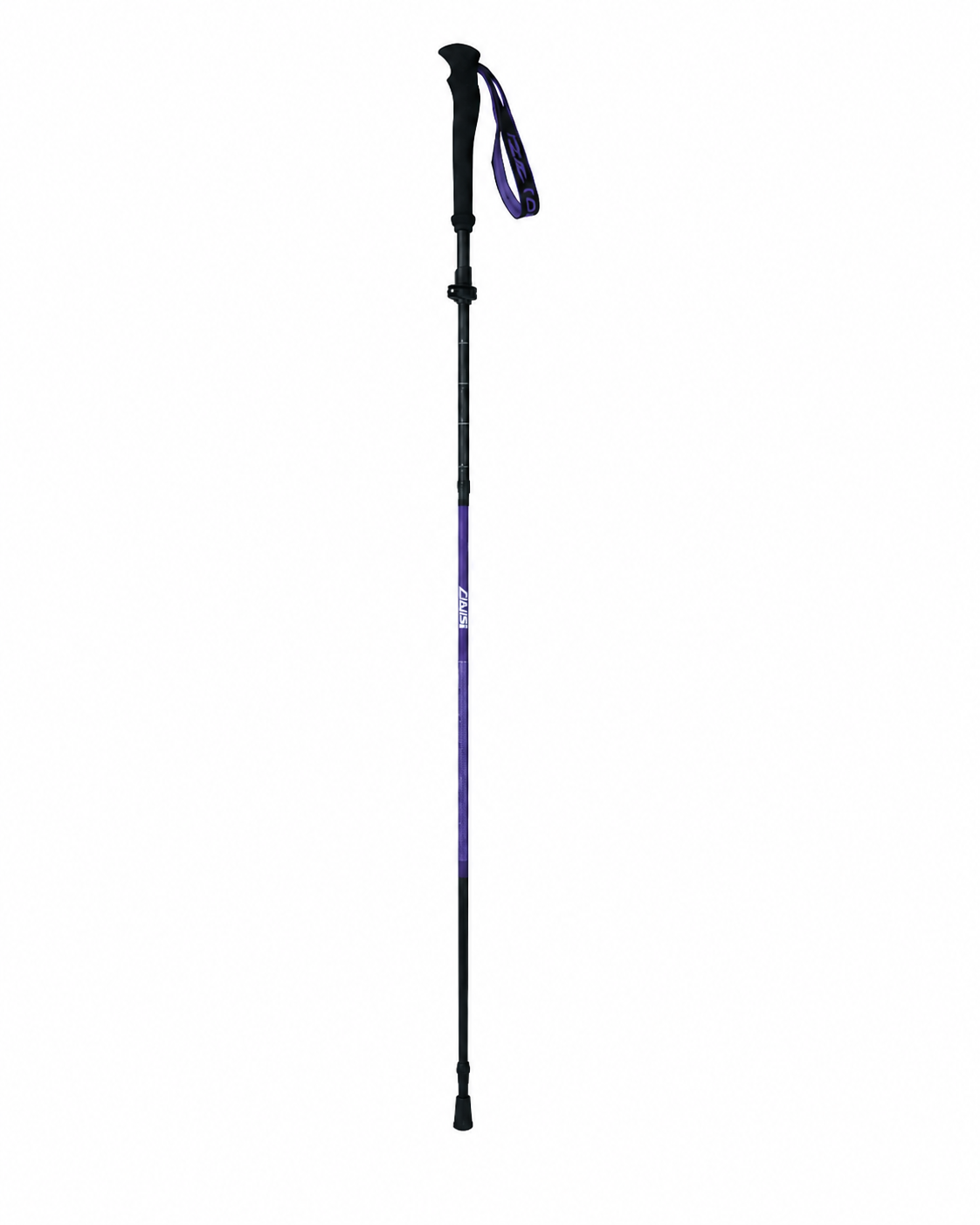
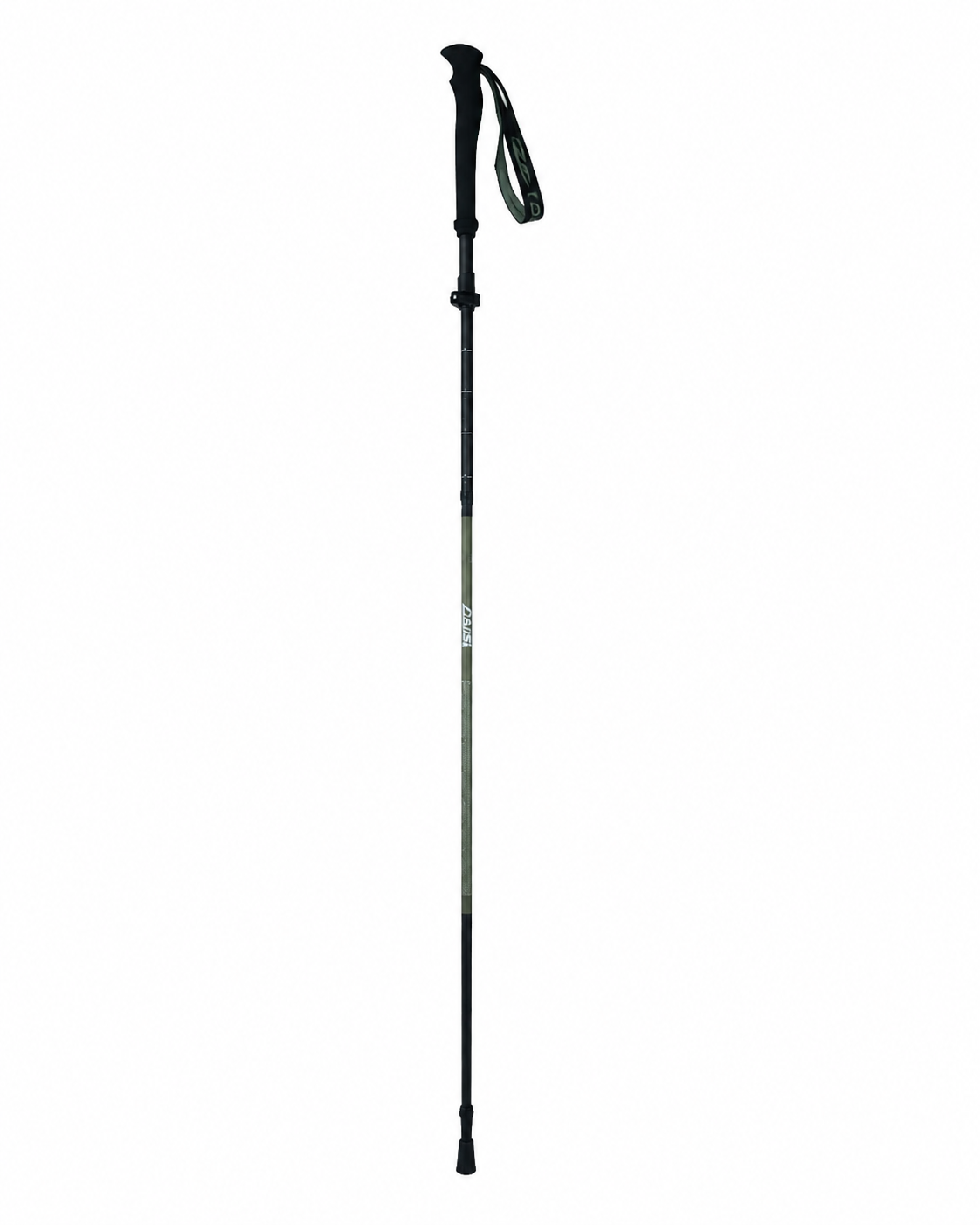
Ridgeline Carbon Trekking Poles
Includes 2 poles
4.5 · 2 reviews$119.00 USD
In stock, ready to ship
- Three-section carbon build, folds to daypack length
- One flick-lock per section, no dials to study
- Adjustable across the full 110-130 cm range
Three-section carbon poles that fold short enough for a daypack and set up in seconds. Light enough to forget on easy ground, solid enough to lean on where the trail gets loose. One flick lock, no dials to study, nothing to get wrong. They support the next step, whatever pace you take it at.
Specifications
- Grip
- Cork/foam blend
- Basket
- Trekking (removable)
- Material
- Carbon fiber
- Sections
- 3
- Folded length
- 40 cm
- Locking system
- Flick lock
- Weight per pole
- 195 g
Shipping & returns
- Free shipping within the US — most orders arrive in 5–8 business days.
- Unused items in original condition can be returned within 30 days of delivery.
- To start a return, email support@altapano.com with your order number.
Trekking poles, explained
Do I actually need trekking poles?
Not to enjoy the trail — plenty of good days out don't involve poles at all. What they do is take real load off your knees and ankles, especially going downhill, and give you two extra points of contact on loose or uneven ground. On the carbon poles, the material itself also damps a fair amount of trail vibration before it reaches your hands and joints. Worth it if descents bother your knees, or if you're carrying a pack. Not required for anything else.
How do I choose the right length?
A simple starting point: with the tip on the ground and the pole vertical, your elbow should sit at roughly a right angle when you hold the grip. Go shorter than that for steep climbs, longer for descents — that's what the adjustable range is for.
Should I use one pole or two?
Two, if you're carrying real pack weight or crossing uneven terrain — the stability comes from both hands working together. One is enough for flat, easy trail, or if you need a hand free.
How do I use the wrist strap?
Bring your hand up through the strap from underneath, then grip the strap and handle together. Your hand ends up supported by the strap rather than gripping the pole all day, which saves your hands on a long hike.
Carbon fiber vs. aluminum — what's the real difference?
Carbon fiber (ours is T800 grade) is roughly 15–20% lighter than an equivalent aluminum pole and damps trail vibration better, but it fails differently: a hard sideways impact against rock can crack or splinter it, and a cracked carbon pole usually can't be field-repaired. Aluminum (ours is 7075 grade, the same alloy family used in higher-load sporting equipment) is heavier, but it bends instead of snapping — a bent pole can often still get you home, or be straightened, where a cracked one can't. Lighter and stiffer vs. heavier and more forgiving — that's the real trade-off, not one being “better.”
EVA foam grip vs. cork grip — which is better?
EVA foam is lighter, cushions the palm well, and dries fast after rain, but it compresses and wears down with heavy long-term use. Cork is denser and heavier, but it molds to the shape of your hand over repeated use — like breaking in a boot — and handles sweaty palms in hot weather better. Foam favors low maintenance; cork favors long-term comfort once it's broken in.
External (flick) lock vs. internal (twist) lock — which is more reliable?
A flick lock clamps around the outside of the pole with a cam lever — you can see and feel at a glance whether it's fully closed, and if it loosens over time there's usually a small screw to retension it, which makes it easy to adjust or repair yourself. A twist lock expands a plug inside the tube when you turn it — nothing exposed to snag when it's set right, but grit or sand that gets inside the tube is harder to see and clean out, and a slipping twist lock is harder to fix without tools. Flick locks favor easy maintenance; twist locks favor a cleaner, snag-free profile.
Which one should I pick if I'm not sure?
If weight matters most — long days, steep vertical — go carbon. If durability and peace of mind on rocky, technical terrain matter most, go aluminum. Both fold to daypack length and use a tool-free lock.
Will the tips wear out?
The tips are tungsten steel, which holds an edge on rock and hardpack far longer than the softer steel used on cheaper poles.
How should I care for them?
Rinse grit and mud off the lower sections after wet hikes, let them dry fully before folding away, and check the locks now and then to make sure they still hold under pressure. A little upkeep is what keeps a lock working smoothly for years instead of one season.
Reviews
-
Good!!!
Katl. · Jul 21, 2026 Verified Buyer
-
Good!
I love it
Sol. · Jul 21, 2026 Verified Buyer
Response from Altapano
Thx
